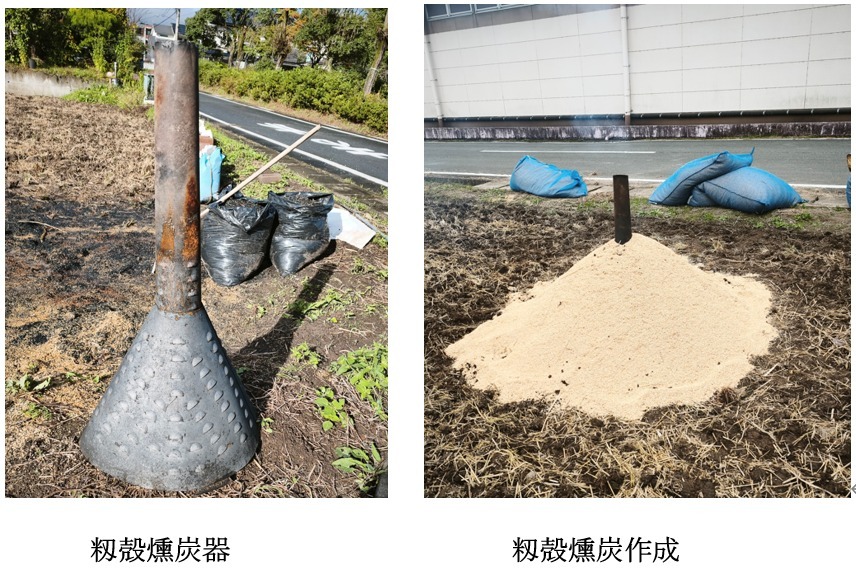
Rice husk charcoal is made by slowly burning rice husks with very little oxygen. It is used mainly to improve soil, rather than as a fertilizer.
After rice is harvested, the husks are removed from the grains. Instead of throwing these husks away, farmers can turn them into charcoal and return them to the soil. This is one of the traditional ways farmers make good use of natural resources.
Main Features
1. Light and full of tiny holes
Rice husk charcoal is light and contains many tiny holes inside and on its surface.
2. Helps improve airflow and drainage
Mixing it into the soil may improve soil structure, helping air and water move through the soil.
3. Helps hold water
Its tiny holes can hold water. However, the effect depends on the type of soil and how much charcoal is used.
4. A home for soil microbes
Its tiny holes can also provide places for soil microbes to live.
5. Alkaline
Rice husk charcoal is often alkaline. It may help improve soil that is too acidic. Its pH varies depending on how it is made.
6. Contains substances from rice husks
It contains silicon and other substances from the original rice husks. However, how much of this silicon plants can use depends on how the charcoal is made.
7. Stays in the soil for a long time
The charred material breaks down slowly, so it can remain in the soil for a long time.
How to Use It
1. Mix it into fields and gardens
Mix it into the soil to help improve soil conditions. The amount used should depend on the soil and the crops being grown.
2. Mix it into soil for young plants
It can help adjust airflow and drainage in seedling soil. Use an amount suitable for growing young plants.
3. Add it to compost
It may improve airflow in compost. The amount used should depend on the materials and their moisture levels.
4. Use it as mulch or in planting holes
Small amounts can also be used around plants or mixed into planting holes, depending on the crop and soil conditions.
Things to Remember
1. Rice husk charcoal is mainly used to improve soil. It cannot replace fertilizer.
2. Because it is often alkaline, using too much may raise the soil's pH. Take special care with plants such as blueberries, which prefer acidic soil.
3. After making the charcoal, add plenty of water and make sure all fire and glowing embers are completely out. If any heat remains, the charcoal may start burning again and cause a fire.
4. Dry charcoal can create dust. Avoid handling it on windy days, and take care not to breathe in the dust.
5. Before burning rice husks, check local rules and regulations. Also, take care to reduce the effects of smoke and flying sparks on people nearby.
Making Rice Husk Charcoal at Sato Farms
This year, I made rice husk charcoal twice at Sato Farms. Each time, I worked from the evening until around midnight.
The process always produces some smoke, so I try to choose times when it is less likely to affect people nearby.
The most important thing is to make sure the fire is completely out.
Once, I left the charcoal smoldering overnight. By the next morning, a large amount had turned to ash.
Since then, I have always made sure that everything is fully extinguished before I finish the job.
I mainly use the finished charcoal to improve the soil in my vegetable garden. It is one of the materials I use to prepare the soil and help my vegetables grow well.
How to Make Rice Husk Charcoal
I plan to explain the process in more detail in a separate article, with photos of the actual work.
The article will cover:
- Tools needed, including a rice husk charcoal burner
- How much rice husk to use
- How to start the fire
- How long the process takes
- How to make sure the charcoal is completely extinguished